1. Smart Kitchen Technology Integration
The modern kitchen is becoming increasingly intelligent, with smart appliances and integrated technology leading the charge. Homeowners are embracing connected devices that make cooking, cleaning, and food storage more efficient than ever before. Smart refrigerators now feature internal cameras that let you check contents from your smartphone while grocery shopping, while smart ovens can be preheated remotely and even suggest cooking times based on the dish you're preparing.
Voice-activated assistants have found their natural home in the kitchen, allowing hands-free control of timers, recipes, and even appliances. Imagine asking your kitchen to preheat the oven, set multiple timers, or pull up a recipe video—all while your hands are covered in flour. Smart faucets with touchless activation and precise temperature control are becoming standard features, offering both convenience and water conservation.
Induction cooktops are experiencing a renaissance, not just for their energy efficiency but for their smart features. Many models now offer precise temperature control via smartphone apps, automatic shut-off features, and even cooking assistance that guides you through complex recipes. The integration of technology extends to lighting systems too, with smart LED lights that can adjust color temperature throughout the day, creating the perfect ambiance for cooking, dining, or entertaining.
2. Sustainable and Eco-Friendly Materials
Sustainability is no longer just a buzzword—it's a fundamental consideration in kitchen design. Homeowners are increasingly seeking materials that are both beautiful and environmentally responsible. Recycled glass countertops offer stunning visual appeal while giving new life to materials that would otherwise end up in landfills. These surfaces come in a variety of colors and patterns, each piece unique in its composition.
Reclaimed wood is finding new purpose in kitchen design, particularly for island countertops, open shelving, and accent walls. Each piece tells a story, often salvaged from old barns, factories, or wine barrels, bringing character and warmth to the space. Bamboo cabinetry is gaining popularity as a rapidly renewable resource that's both durable and attractive, offering a contemporary alternative to traditional hardwoods.
Low-VOC (Volatile Organic Compound) paints and finishes are becoming the standard rather than the exception, improving indoor air quality and reducing harmful emissions. Cork flooring, harvested from tree bark without harming the tree, provides a comfortable, antimicrobial surface that's perfect for the kitchen environment. Even countertop materials are evolving, with bio-based resins and recycled paper composite surfaces offering sustainable alternatives to traditional stone and laminate options.
Energy-efficient LED lighting, Energy Star-rated appliances, and water-saving fixtures round out the sustainable kitchen package. These choices not only reduce environmental impact but also lower utility bills, making sustainability both responsible and economical. Many Atlanta homeowners are discovering that green choices don't mean compromising on style or performance—in fact, sustainable materials often offer superior durability and unique aesthetic appeal.
3. Bold Color Palettes and Two-Tone Cabinets
After years of all-white kitchens dominating the design landscape, 2024 brings a refreshing embrace of color and contrast. Homeowners are becoming bolder in their color choices, moving beyond safe neutrals to express personality and create visual interest. Deep, rich hues like navy blue, forest green, and charcoal gray are making strong statements in kitchen cabinetry, often paired with lighter countertops and backsplashes for balance.
The two-tone cabinet trend continues to evolve, offering creative ways to add depth and dimension to kitchen design. Popular combinations include pairing dark lower cabinets with light upper cabinets, or using a contrasting color for the kitchen island while keeping perimeter cabinets neutral. This approach allows homeowners to incorporate bold colors without overwhelming the space, creating focal points that draw the eye and define different zones within the kitchen.
Warm earth tones are experiencing a comeback, with terracotta, rust, and warm browns bringing a sense of comfort and connection to nature. These colors work particularly well in kitchens with natural wood elements and can be incorporated through cabinetry, backsplashes, or accent walls. For those who prefer a more subtle approach, sage green and soft blue-gray tones offer color without being too dramatic, creating serene, spa-like atmospheres.
Hardware and fixtures are also getting the color treatment, with matte black, brushed gold, and mixed metal finishes adding another layer of visual interest. The key to successfully incorporating color is balance—pairing bold choices with neutral elements, ensuring adequate lighting to prevent dark colors from making the space feel smaller, and selecting finishes that complement rather than compete with each other.
4. Multifunctional Islands and Expanded Storage Solutions
The kitchen island has evolved from a simple prep surface into a multifunctional hub that serves as the command center of the modern kitchen. Today's islands are designed to accommodate multiple activities simultaneously—food preparation, casual dining, homework stations, and entertaining spaces all in one. Extended waterfall countertops create visual drama while protecting cabinet edges, and integrated seating areas with comfortable bar stools turn the island into a natural gathering spot.
Built-in appliances are being cleverly incorporated into island designs, with options including cooktops, wine refrigerators, microwave drawers, and even dishwashers. This centralized approach to appliance placement creates more efficient work triangles and keeps the cook engaged with family and guests. Power outlets and USB charging ports built into island sides or pop-up from countertops ensure devices stay charged without cluttering counters with cords.
Storage innovation is reaching new heights with solutions that maximize every inch of available space. Deep drawers with custom organizers are replacing traditional lower cabinets, providing better access to pots, pans, and small appliances. Corner cabinets feature pull-out mechanisms or lazy Susans that make previously hard-to-reach spaces fully functional. Vertical storage solutions, including pull-out pantries and tall cabinets with interior lighting, keep items organized and visible.
Hidden storage is becoming increasingly sophisticated, with appliance garages concealing small countertop appliances, toe-kick drawers utilizing the space beneath cabinets, and false drawer fronts hiding tilt-out trays for sponges and scrubbers. Specialized storage for specific items—spice pull-outs, knife blocks built into drawers, divided utensil organizers—ensures everything has its place. The goal is to maintain clean, uncluttered countertops while keeping frequently used items easily accessible.
5. Statement Lighting and Open Shelving
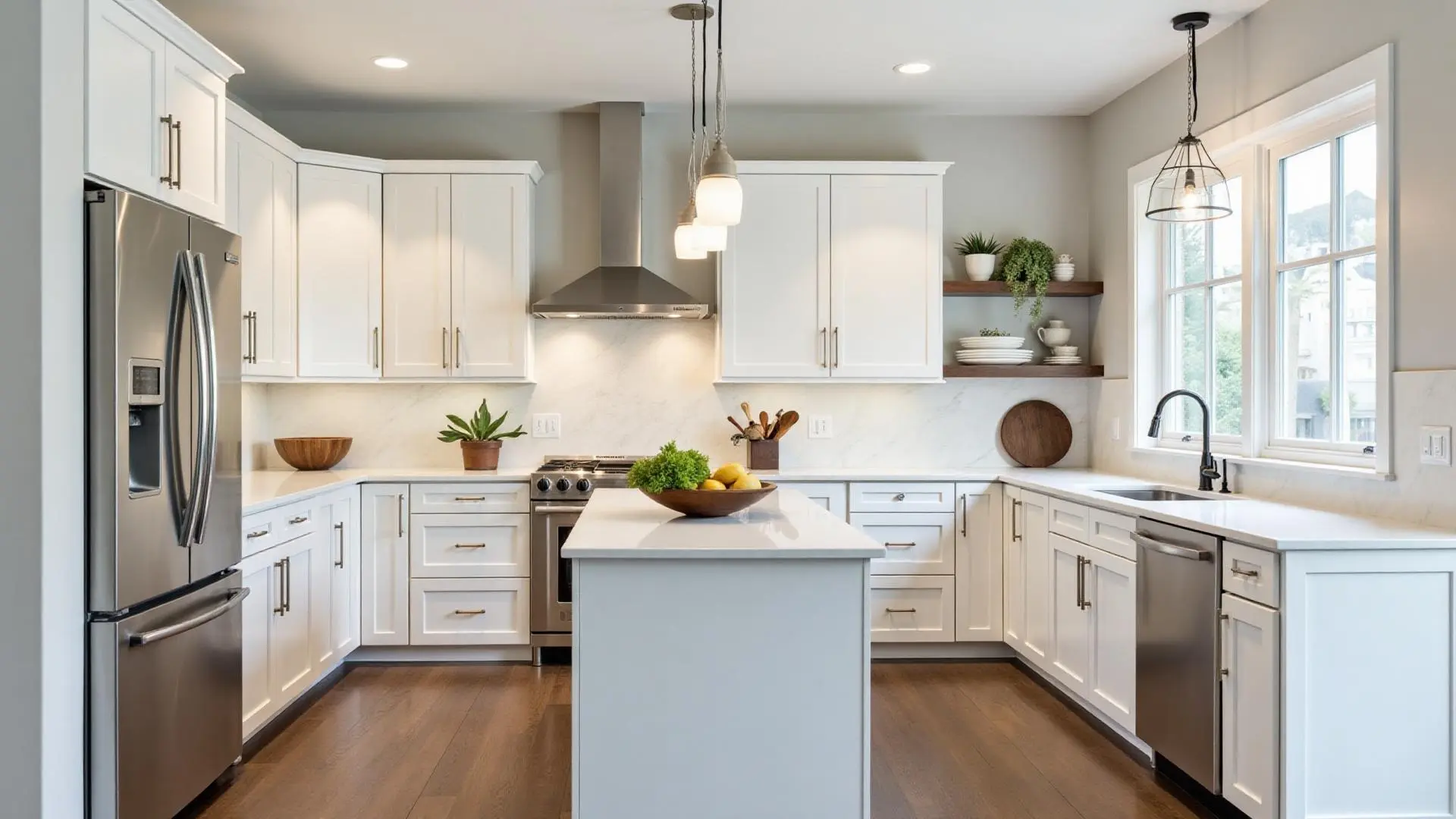
Lighting has emerged as a crucial design element rather than an afterthought, with statement fixtures serving as functional art pieces that define the kitchen's character. Large-scale pendant lights over islands have become focal points, available in styles ranging from industrial to contemporary to traditional. Oversized drum shades, geometric cage designs, and handcrafted art glass fixtures make bold statements while providing essential task lighting.
Layered lighting design is the key to a well-functioning kitchen, combining ambient, task, and accent lighting to create depth and flexibility. Under-cabinet LED strips illuminate countertops for food preparation, while toe-kick lighting provides safety and ambiance during evening hours. Cabinet interior lighting showcases glassware and makes finding items easier, while decorative sconces flanking windows or open shelving add architectural interest.
Open shelving continues to trend, offering both practical storage and opportunities for display. Floating shelves create an airy, open feeling while providing easily accessible storage for frequently used dishes, glassware, and decorative items. The key to successful open shelving is thoughtful curation—displaying items that are both functional and beautiful, maintaining organization, and regularly refreshing the arrangement to prevent visual clutter.
Many homeowners are opting for a mixed approach, combining traditional closed cabinetry with strategic open shelving to create visual interest and practical storage. Glass-front cabinets offer a middle ground, providing dust protection while allowing display of attractive dishware. The combination of varied storage solutions, united by thoughtful design and quality finishes, creates kitchens that are both highly functional and visually appealing.
Bringing It All Together
The beauty of these 2024 kitchen trends is their flexibility—you don't need to incorporate all of them to create a stunning, functional space. The best kitchen renovations thoughtfully combine elements that reflect the homeowner's lifestyle, cooking habits, and aesthetic preferences. Whether you're drawn to smart technology, sustainable materials, bold colors, innovative storage, or statement lighting, each trend offers opportunities to enhance your kitchen's functionality and appeal.
When planning your kitchen renovation, consider which trends align with your daily routines and long-term goals. A young family might prioritize durable materials and ample storage, while empty nesters might focus on entertaining features and high-end appliances. Budget considerations will also influence which trends to embrace—some, like open shelving and bold paint colors, are relatively affordable, while smart appliances and custom cabinetry require larger investments.
Working with experienced kitchen design and renovation professionals ensures these trends are implemented effectively, with proper attention to functionality, building codes, and long-term value. At Hightower Home Improvement, we stay current with the latest trends while respecting timeless design principles, helping Atlanta homeowners create kitchens that are both contemporary and enduring.